Construction
Fused, half canvas or full canvas: how a suit jacket is built
A suit jacket keeps its shape because of what sits between the cloth and the lining. In a fused jacket that layer is an interlining bonded to the cloth with heat; in a half canvas jacket a loose canvas runs through the chest and lapels, with the lower front fused; in a full canvas jacket the canvas runs the whole length of the front. The more canvas, the more the jacket shapes itself to the wearer, and the more work and cost go into it.
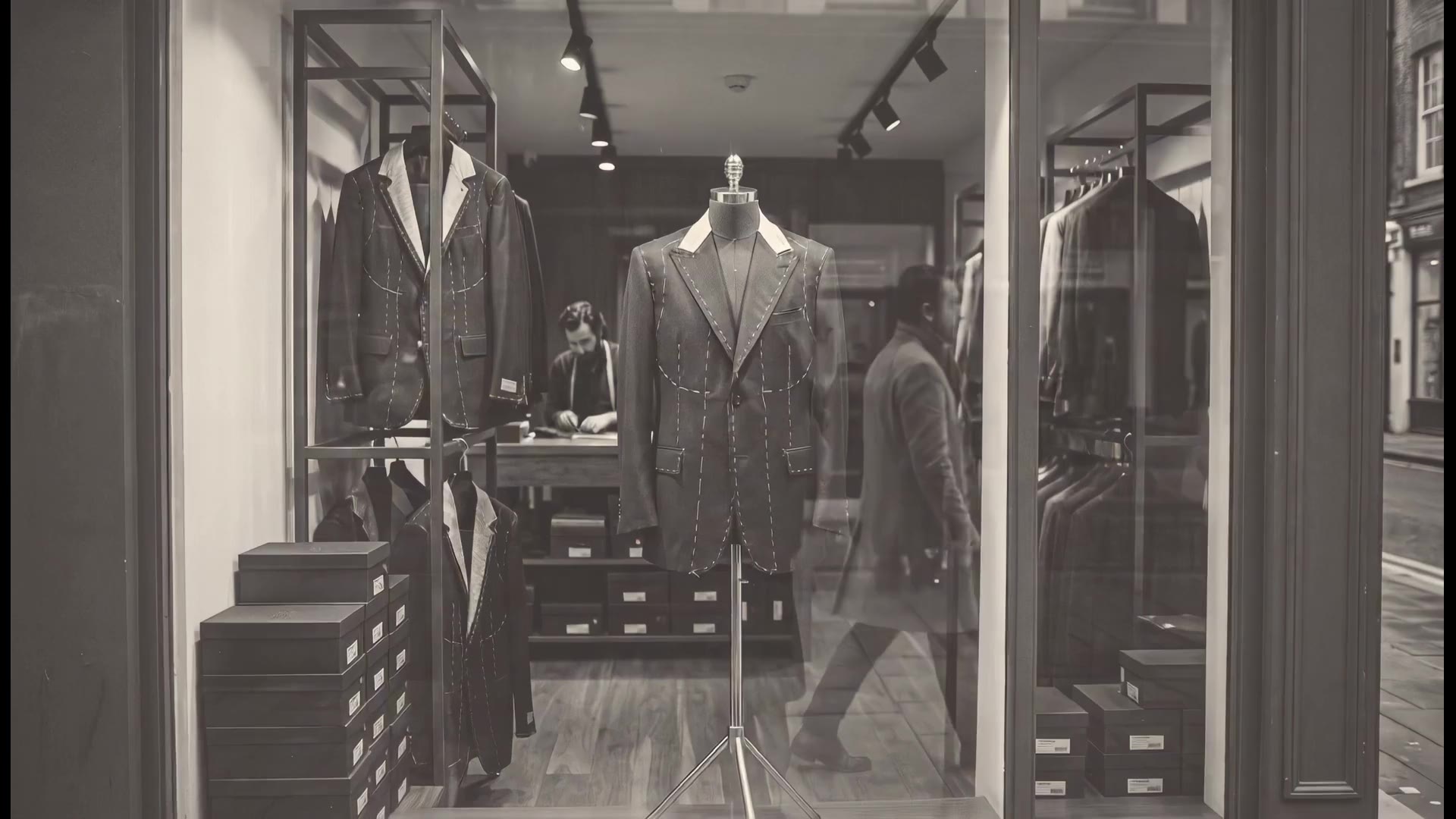
What is inside a suit jacket?
The front of a tailored jacket is built in layers. On the outside is the shell cloth. On the inside is the lining. Between them sits the interlining, which gives the front its body, holds the chest and carries the roll of the lapel. Shoulder pads and sleeve heads shape the top of the jacket, whatever the construction.
When buyers and tailors say fused, half canvas or full canvas, they are describing that middle layer: what it is made of, how far down the front it runs, and whether it is glued to the cloth or left to float.
What is a fused jacket?
In a fused jacket the interlining is a fusible: a cloth coated on one side with an adhesive that melts under heat and pressure. The front panels, and often the facings and other small parts, are passed through a fusing press, which bonds the fusible to the shell cloth across its whole surface.
Fusing is quick, consistent and repeatable, which is why it sits at the entry end of the price range. It gives a clean, smooth front that holds the shape it left the factory with. What it gives up is movement: the cloth and the interlining behave as one sheet, so the chest is flatter and the lapel tends to lie pressed rather than roll. If the temperature, pressure or time is wrong for the cloth, the bond can fail later and the front can bubble, which is why fusing has to be tested cloth by cloth.
At Hajjo Apparel, the fused jacket takes a woven fusible with a poly or viscose lining. Both plants, Obour City in Cairo and Homs, build fused. The fusing runs on a Veit Fuse Master continuous fusing press, and the fusing is tested on every batch.
What is a half canvas jacket?
A half canvas jacket has a canvas chest piece that floats between the shell cloth and the lining, running from the shoulder through the chest and into the lapel. It is held by stitching, not glue. Below the chest, the front is fused.
The canvas is where the difference shows. It gives the chest a shape of its own and lets the lapel roll softly instead of lying flat, and over time the chest settles to the wearer. Because only the upper front carries the extra work, half canvas sits in the middle of the price range, and for many brands it is the construction of the core range: shape where it is seen, at a price that still works.
At Hajjo Apparel, half canvas means a horsehair chest with a viscose lining. It is built at Homs, and most of the factory’s volume runs at half canvas.
What is a full canvas jacket?
In a full canvas jacket the canvas runs the full length of the front, from shoulder to hem, and floats freely inside it. Nothing is bonded to the shell cloth; the canvas is attached by stitching alone.
The whole front can then move with the body and, with wear, take on its shape. The cloth drapes more naturally, the lapel has its fullest roll, and there is no bond to fail. It is also the construction with the most hand work and the most time in it, so it sits at the top of the price range.
At Hajjo Apparel, full canvas means a full canvas with a hand set shoulder. It is built at Homs.
How do the three compare?
| Fused | Half canvas | Full canvas | |
|---|---|---|---|
| The interlining | Fusible bonded across the front | Floating canvas in the chest and lapel, fused below | Floating canvas through the whole front |
| The lapel | Flatter, pressed | Soft roll | Fullest roll |
| With wear | Keeps its first shape | The chest settles to the wearer | The whole front settles to the wearer |
| Price bracket | Entry | Middle | Top |
| At Hajjo Apparel | Woven fusible, poly or viscose lining | Horsehair chest, viscose lining | Full canvas, hand set shoulder |
| Built at | Obour and Homs | Homs | Homs |
Which construction suits your range?
Start from the customer and the price the garment has to meet, not from the construction. A few principles hold for most ranges.
- Fused suits entry price points, ranges where a clean, sharp front is the look, and garments that must be identical across a long run.
- Half canvas suits the core of a tailored range: the shape and lapel roll a customer sees and feels, without the cost of a full canvas front.
- Full canvas suits the top of a range and customers who will wear the jacket often and for years.
Many brands run more than one construction, for example a fused entry line beside a half canvas main line, so that price steps are real differences in the garment rather than in the label alone.
How can a buyer tell them apart?
Take the cloth at the front of the jacket, a little below the top button, between finger and thumb and gently pull the outer layer away from the layer beneath. In a canvassed jacket you can feel a separate, looser layer inside. In a fused front, the cloth and interlining move together as one.
Look at the lapel as well. A canvassed lapel rolls from the collar towards the top button; a fused lapel usually lies flatter, as if pressed.
What does the choice change in your order?
- The tech pack. Construction is one of the things the factory needs from you, alongside measurements, size chart, cloth, quantities per size, labels and a delivery date. Name it at the start.
- The plant. At Hajjo Apparel, half canvas and full canvas are built at Homs; fused can be built at either plant.
- The sample. Sample in the construction you mean to produce. A sample follows within three weeks, and it is the moment to judge the chest and the lapel roll.
- The checks. Fusing is tested on every batch, and after pressing the shape is checked on the form. The full sequence is set out in From tech pack to delivery: how a private label suit order runs.
The minimum order is 200 pieces a design, in your own label. If that is more than you need, What minimum order quantity means for a suit order sets out the smaller routes inside the Group, and How to choose a suit manufacturer in Egypt covers the other questions to put to a factory.
Hajjo Apparel and Manufacturing
Ask for a sample
Tell us the construction, the cloth and the quantities per size you have in mind through the inquiry form on the Hajjo Apparel page, or write to [email protected].